PHOTON ASSISTED DIAMOND TURNING OF OPTICS
Infrared (IR) materials such as CaF2, zinc selenide, and silicon exhibit brittle fracture behavior at room temperature. Conventional diamond cutting of these materials causes extensive tool wear, subsurface damage, and surface imperfections on the finished parts.
Laser-assisted cutting addresses these challenges by locally heating the material in the cutting zone with a laser beam. This localized thermal softening reduces brittleness during machining, resulting in:
- Improved surface finish
- Reduced subsurface damage
- Extended diamond tool life
Alternatively, ultra-hard materials — such as binderless tungsten carbide alloys used for embossing glass optics — can also be machined with laser assistance to achieve optical-grade surface quality.
LASER BEAM POSITIONING IN LASER-ASSISTED MACHINING
Because diamond is transparent to the laser beam, the radiation can be directed through the diamond tool itself to heat the workpiece material in the cutting zone. This approach, however, requires special tools with polished back sides. Total internal reflection of the radiation inside the diamond limits the applicable laser power and requires tedious alignment of the beam path.
An alternative approach is to direct the laser beam from above the diamond. This configuration allows the use of cost-effective conventional tools and enables higher laser powers where necessary.
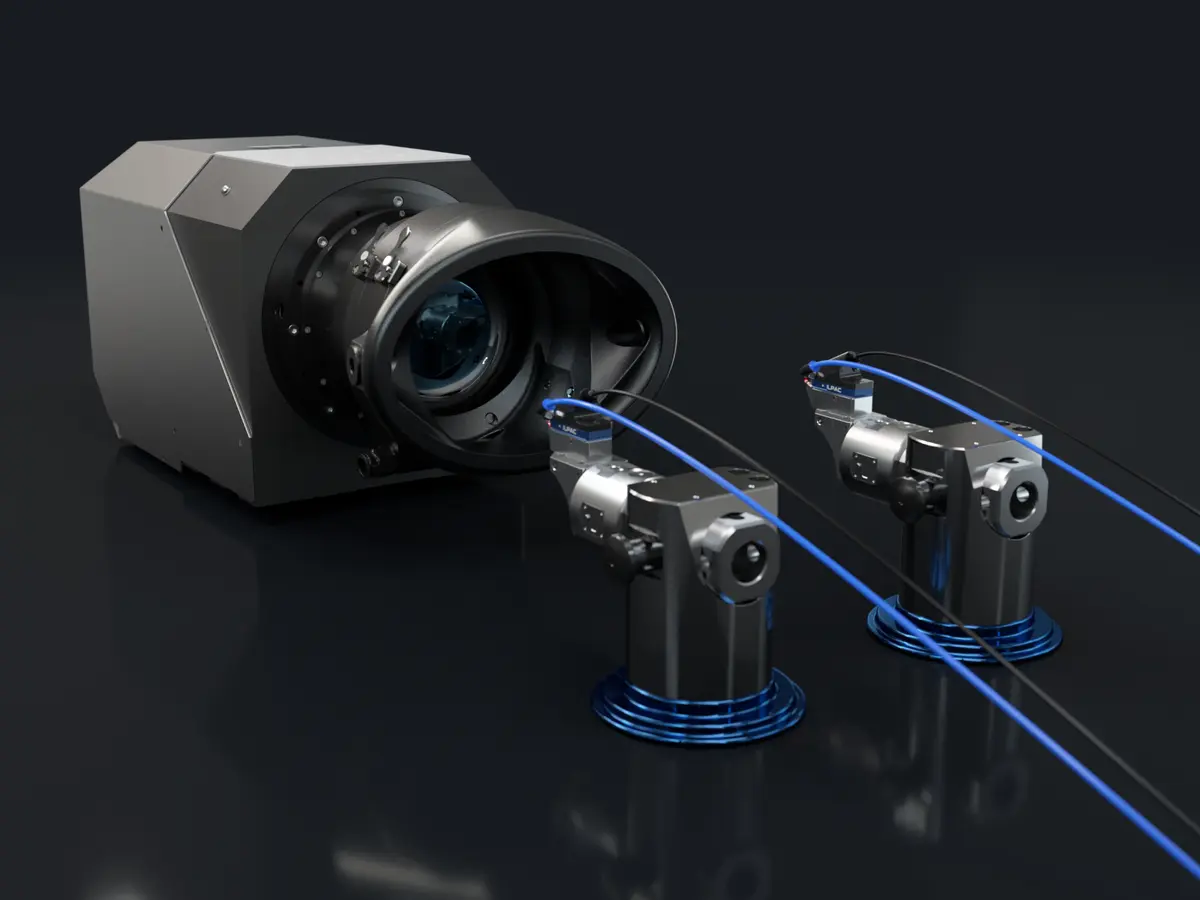
A key challenge with this setup is that chips and contamination generated during machining can disturb the laser beam. The ILPAC tooling unit addresses this through a special coaxial beam configuration. A protective air or shielding gas stream provides additional beam protection, ensuring stable and uninterrupted laser operation even under demanding cutting conditions.
2X MAKES THE DIFFERENCE
Cutting infrared lenses requires two distinct machining stages: a rough cutting pass to achieve the desired geometry, followed by a fine finishing cut to produce a smooth surface finish free of heat rings, diffractive structures, and other machining artefacts.
Conventional rough cutting of IR materials causes excessive tool wear and surface damage. The laser-assisted finishing cut must then remove the damaged surface layer left by roughing. This typically requires multiple passes, which limits the lifetime of the finishing tool.
To address this, the Innolite ILPAC system features two independent lasers — one dedicated to laser-assisted rough cutting and one for laser-assisted finishing. By applying laser assistance in both stages, the volume production efficiency of infrared lenses can be significantly improved.
Both lasers are fully integrated into the machine's HMI and PLC, making operation straightforward, practical, and safe.
SAMPLE RESULTS
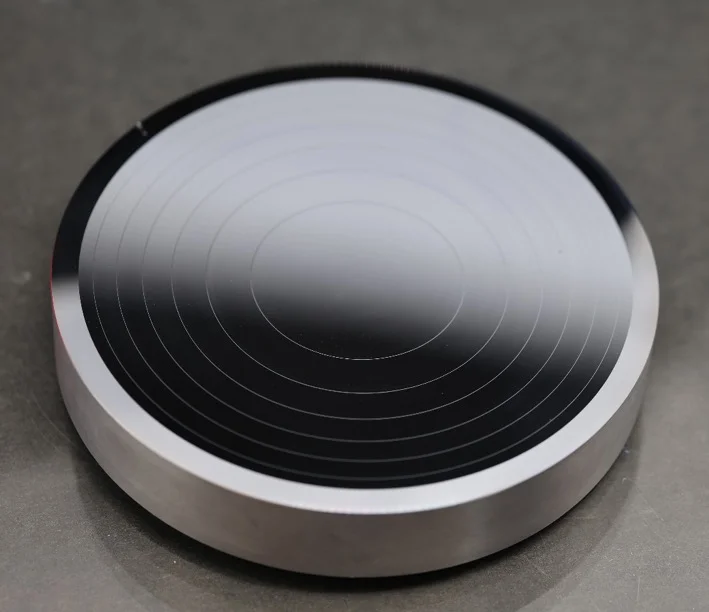
- Diffractive lens, Silicon, Dia. 150 mm
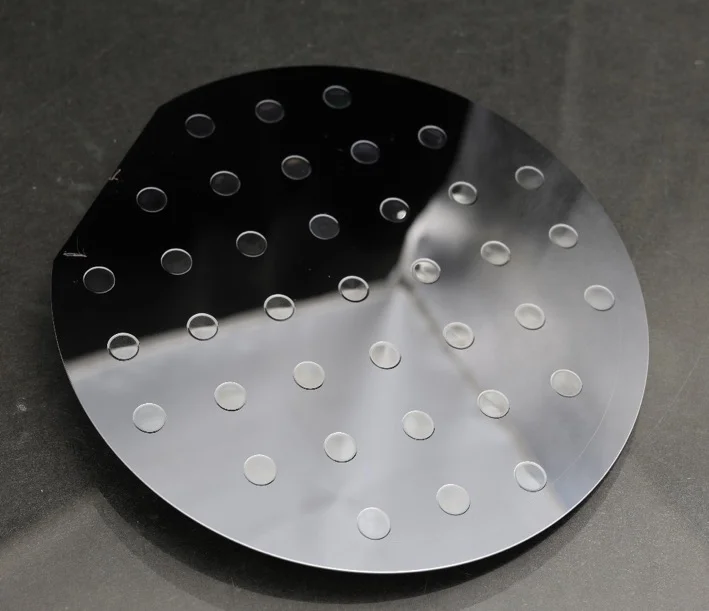
- Micro lens array on wafer, Dia. 200 mm, lens diameter 1.8 mm
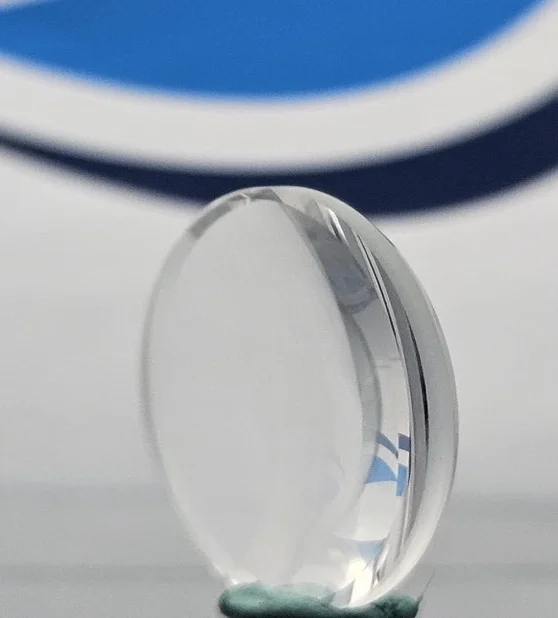
- CaF2 lens with diffractive structures, Dia. 60 mm